美国恐怖故事第三季
乔布斯、库克都讨厌的触屏Mac,可能要被苹果做出来了_我的网站

A |
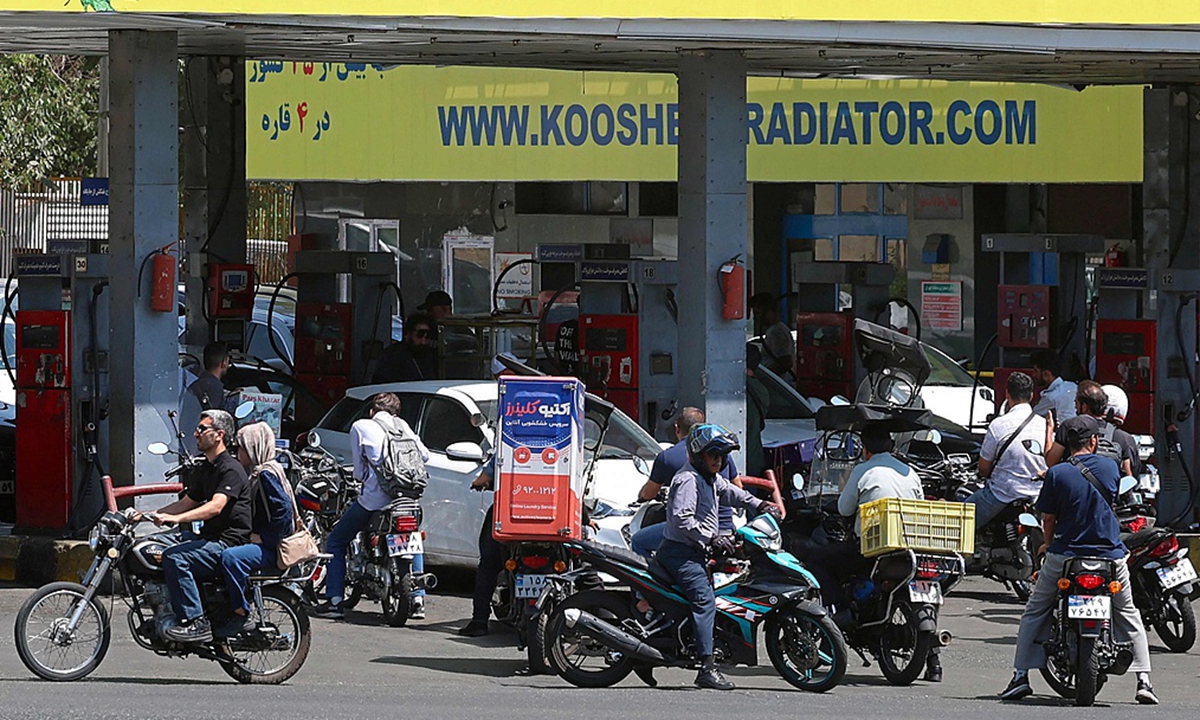
As military strikes and diplomatic negotiations have both failed to bring an early end to the roughly six‑month‑old US-Iran conflict, Washington rolled out new sanctions against Tehran on Monday local time intended to further strangle its economy. Iran, for its part, has vowed a tougher pushback.
In a news conference on Monday, Treasury Secretary Scott Bessent threatened new sanctions on countries refusing to cut economic ties with Iran, following recent rhetoric from Washington threatening an "economic D-Day" for Iran.
Meanwhile, the Office of Foreign Assets Control (OFAC) under the US Treasury announced secondary sanctions on nearly 60 entities, individuals, and vessels in multiple jurisdictions which, according to the US' claims, enable Iran's activities, including so-called nuclear and missile technology procurement, cyber operations, and oil-revenue generation networks.
According to Reuters, those sanctions targeted businesses in China, the UAE, Singapore and several other countries, including a cooking-oil refinery in France, but did not include any of the Chinese financial institutions suspected of facilitating Iran's oil trade.
In response to US Treasury Secretary Scott Bessent laying out plans for economic asphyxiation of Iran, expanding Washington's secondary sanction threats and warning of dire consequences for countries that do not join the campaign, Chinese Foreign Ministry spokesperson Lin Jian said at a press briefing on Tuesday that China has made clear on many occasions its firm opposition to illicit unilateral sanctions that have no basis in international law or the authorization of the UN Security Council.
"Economic warfare and maximum pressure provide no solution. On the contrary, they only serve to fuel tensions and lead to risk spillover, which will disrupt the global economic and financial order, and harm the legitimate rights and interests of other countries," the spokesperson said.
The pressing task is to facilitate the deescalation of the situation and return to dialogue and negotiation as soon as possible, Lin said, adding that China will do everything necessary to firmly safeguard its rights and interests, Lin added. Lin also said China's cooperation with Iran is conducted within the framework of international law, thus should not be disrupted.
When asked whether China has received any such timeline, as the US stated it would give countries a timeline on when to shut down the actions that it has identified, and how China intends to respond to the relevant announcements by the US Treasury involving China-based entities and individuals, Chinese Foreign Ministry spokesperson Lin Jian stated on Tuesday that China is closely following the developments, and will do everything necessary to firmly safeguard our rights and interests.
In May this year, China's Ministry of Commerce issued a blocking ban prohibiting any recognition, enforcement or compliance with US sanctions imposed on five Chinese companies on the grounds of their alleged involvement in Iranian petroleum transactions.
Relying on its financial hegemony and long‑arm jurisdiction, the US enforces unilateral sanctions with no basis in international law. Such measures severely undermine fundamental consensus for international trade and erode the existing international order, Zhou Mi, senior research fellow at the Chinese Academy of International Trade and Economic Cooperation, told the Global Times on Tuesday.
In essence, Washington is imposing its Iran‑focused policies to enterprises across the globe, compelling third‑party actors to fall in line with its diplomatic objectives, Zhou noted.
The latest sanctions would affect a broader range of countries, industries and firms. They will not only draw wider opposition from the international community, but also boomerang on the interests of US‑owned enterprises, he added.
Fewer levers left
"We are launching an economic onslaught against Iran's financial connections around the globe," Bessent claimed at a press conference. "Our objective is to sever every economic lifeline" that sustains the country, he said, according to a Treasury release.
The US Treasury Department said in a release that the new sectoral sanctions determinations target five critical sectors - digital assets, technology, gold, aviation and shipping - that the US claimed Iran has relied on to support its economy.
US Treasury claimed that "any entity that facilitates money laundering or sanctions evasion on behalf of Iran risks being cut off from the US financial system."
OFAC also suspended several general licenses that previously authorized certain remittance payments to Iran and Iranian access to the US cultural and academic system. The office also issued additional guidance on the so-called sanctions risks of bowing to Iranian demands related to shipping in the Strait of Hormuz.
Mohammad Mokhber, an aide to Supreme Leader Mojtaba Khamenei, said in an X post on Monday that Iran's response to US sanctions and pressure will be "more decisive than before."
Iranian Economy Minister Ali Madanizadeh said that Tehran "is and was ready," with a two-year plan to counter Washington's new sanctions. He told state television that "it seems they wished to suffer yet another defeat," per an AFP report.
Iranian Parliament Speaker Mohammad Bagher Ghalibaf responded in an X post that "the Americans know no one will believe their nonsense," noting that the US is not in a position economically to restrict its relations with other countries.
Alan Eyre, a distinguished diplomatic fellow at the Middle East Institute, told NBC News that after six months of combat, the US government "has few remaining levers it can use to convince Iran's major trading partners to materially reduce their economic ties."
While Washington's maximum‑pressure campaign may deliver short‑term shocks to Iran's economy, it can hardly "strangle" the country completely, said Liu Zhongmin, a professor at the Middle East Studies Institute of Shanghai International Studies University.
He added that Iran's economic resilience cannot be underestimated. Having borne decades of crippling sanctions from the US and Western nations, Tehran has built substantial experience in sanction‑busting and developed coping mechanisms ranging from basic‑industry self‑reliance and regional trade networks to oil‑for‑goods swaps and non‑US dollar‑denominated trade. Furthermore, the Strait of Hormuz remains a source of strategic leverage for Iran to push back against US pressure.
The expert said that Tehran and Washington are encountering "a battle of wills," and Iran believes the economic costs the US would suffer from a Hormuz blockade would outweigh the damage inflicted on Iran by sanctions.
Washington's "economic strangulation" policy risks ending in failure unless it yields short‑term outcomes, particularly securing the opening of the Strait of Hormuz, Liu added.
Self-created dilemma
As the US ramps up pressure on Iran, Americans are growing averse to a protracted war.
According to a Reuters/Ipsos poll that closed on Monday, US public approval of the war with Iran fell to its lowest level since the conflict's early days, with just 31 percent of Americans supporting US military action.
On June 18, the US and Iran signed an MoU, under which the two were scheduled to hold negotiations within a period of 60 days, which ended on August 17, to reach a final agreement. However, the talks' fate remains unclear following renewed escalation between the two countries.
Iranian political analyst Mostafa Khoshcheschm told Al Jazeera that the new US sanctions intended to create an "economic onslaught" were a "political show" of intimidation.
Liu said that by resorting to an "economic strangulation" tactic after miring itself in a fruitless military quagmire over Iran, the US has laid bare its practical predicament and strategic dilemma, and seemingly running out of cards.
Citing sources, CNN reported earlier this month that the US military has exhausted nearly 80 percent of its interceptors for a key missile defense system as senior US military commanders are warning that the Pentagon's munitions stockpile is "dangerously low."
Faced with depleted ammunition stockpiles and insufficient military‑industrial capacity, and amid growing domestic criticism of its Middle East policy, the White House has opted for tough economic measures against Iran, Liu said. "Less costly than military coercion, such moves help Washington strike a tough posture before voters and shun political risks from further military escalation," said the expert.
There is, however, an increasingly obvious paradox in Washington's economic warfare against Iran: the tighter the sanctions, the tighter global energy supplies become, and the higher costs borne by American consumers and businesses, the expert added.
。

B | MacPad 要来了? 如果你想买一台新的MacBook Pro,或许可以再等等。 比起刚刚发售、除了芯片几乎没有变化的M5 MacBook Pro,苹果真正在酝酿的大招,可能还在明年…… 这将是Mac产品线,甚至可以说是整个苹果电脑历史迄今,最重大的设计和功能调整,不仅违背了乔布斯的「祖训」,也打了库克的脸。 一言蔽之:明年的MacBook Pro,将配备一块触控屏。 全新设计的MacBook Pro 自M1 Pro开始,MacBook Pro的当前模具已经沿用五代,总体看下来赞赏多过批评。更圆润的机身和多样的接口,更强调实用主义和工具属性。

C | 再加上M系列芯片强大的性能和卓越的能效,让最近几年的MacBook Pro收到的好评远多于英特尔架构时代的前辈。 根据彭博社爆料,新款的MacBook Pro将会采用全新的设计,一个显著特征是,机身会比现在更轻薄。 多年以来,苹果一直想打造「又轻薄又强大」的MacBook Pro。2016年的改款(当时去掉了MagSafe等一票接口并改换Type-C)就是为了这个目标而来。然而遗憾的是,之后的五年时间里,苹果被性能又差、发热又厉害的英特尔处理器拖了后腿。 好在,苹果在2021年用M系列芯片以及新机身/接口设计,对MacBook Pro的口碑及时进行修复。但产品的厚度和重量已然不是苹果理想中的样子。以16寸MacBook Pro为例,重量达到2.14千克,和市面上大多数性能笔记本已经相差无几。 如果能做得更便携,MacBook Pro无疑会比PC阵营再多出一个续航之外的优势。 事实上,在芯片制程足够先进的当下,把性能本做轻做薄已经不是苹果一家的追求,这两年已经看到一些Windows性能本在往「瘦身」的方向走,想要做出一些差异性。

D | 把MacBook Pro做得更薄,除了对机身有更高的工程学要求,苹果也将对AB面开刀——如果你仔细观察,会发现不管是MacBook Pro还是MacBook Air,AB面都具有相当的厚度。 因此,新款MacBook Pro上的OLED屏幕不止能带来比LCD更深邃的显示效果,也能显著压缩它的厚度。 Mark Gurman透露,MacBook Pro的OLED屏幕将对标iPad Pro,意味MacBook Pro很有可能会同样采用双层OLED技术,亮度和能耗表现都会更出色。 而根据分析师郭明錤,MacBook Pro将采用on-cell触控屏幕,而不是全贴合的「in-cell」。 至于大家关心的屏幕切口问题,好消息是刘海没了——但坏消息是,换成了类似iPhone的「胶囊打孔」…… 由于macOS 26已经能同步iPhone上的实时活动卡片,打孔屏的新MacBook Pro看来也能用上「灵动岛」了。 新设计当然值得期待,但更重磅的,自然还是「触控Mac」。 彭博社称,苹果内部已经在开发加强型铰链和屏幕硬件,让用户在笔记本电脑屏幕上触控操作时不会出现异常的反弹或移动——这也是触控屏电脑/2-in-1电脑的常见痛点。 由于总体的零部件价格更高,新款MacBook Pro的售价会比目前高出几百美元。 和往常一样,MacBook Pro的新设计也将会在晚些时候下放到MacBook Air上,目前预计首款采用OLED屏幕的MacBook Air在2028年推出。 MacBook Pro,还是iPad Pro? 长久以来,苹果内部对「触控电脑」这个概念并不积极。

E | 乔布斯认为,用手指点触垂直的笔记本屏幕的交互不符合人体工学;而不久后或将离任CEO的蒂姆·库克也公开表示过,将平板和笔记本电脑结合起来的想法,就像「把烤面包机和冰箱融为一体」。 ▲2017年库克来参加中国发展论坛时,被提供了一台「烤面包机+冰箱」 还有一个不容忽视的问题:MacBook产品的屏幕是出了名的高素质,也是出了名的不耐刮,直接上下其手很容易对涂层造成破坏。即使是现在的MacBook,屏幕磨蚀也是通病了。 不过,整个笔记本市场,和MacBook定位相似的其他产品,几乎都配备了触摸屏,消费者对MacBook增加触控支持的呼声,也越来越大了。 虽然对于典型电脑用户来说,触控交互远不如键鼠方便。

F | 但考虑到那些自出生起就和智能手机、平板打交道的年轻一代而言,一款强大的笔记本电脑,能够用手指触控交互,似乎也不是什么歪理邪说。 除了人体工学和交互这些更「产品哲学」的理由,彭博社的苹果专家Mark Gurman推测苹果迟迟不给MacBook触摸屏还有一个更商业的原因:担心会影响iPad的销量。 但给iPad增加触控板和键盘,也不能取代一台MacBook——正如这个逻辑,拥有触控屏的MacBook,应该也只是锦上添花。

G | 用户90%的时间还是会继续用屏幕下方的键盘和触控板,和iPad无法构成竞争关系。 根据郭明錤的爆料,苹果内部给MacBook增加触摸屏的理由,是「在一些场景对用户更有用」,例如精准放大、旋转一些图片的素材,调整视频的进度条,也为支持Apple Pencil提供了可能。

H | 可以预见的是,苹果不会只单纯地把一块触控屏幕塞进MacBook,未来的macOS也会做出相应的改变,将整个系统的交互能够配合指尖交互。 这就不得不提到Touch Bar,虽然它不算成功,但也说明苹果其实早就对Mac创新触控交互有所想法。

I | 而iPadOS 26的「Mac化」,反过来也可以说是在为未来的触控Mac探索进行交互和功能。

J | Mac也早已能运行iPad应用,两者之间的差异正在逐渐减少。

K | 实际上,比起扶不起的iPad,这几年的Mac可谓是乘上M芯片的风实现起飞:根据统计机构IDC,Mac在今年第二季度出货620万台,较同期大涨21.4%,远超PC厂商。StatCounter统计,Mac的全球份额也已经上升到15%。 虽然IDC数据显示,iPad上季度出货量是Mac的两倍,但是主力军还是搭载A芯片的入门级iPad。苹果这几年下力气推的iPad Pro,Mark Gurman表示销量不算亮眼。 M芯片已经是苹果Mac产品体验的独特优势,但也带来了巨大的花销。每一代M芯片都耗费数亿美元研发成本,但只能领先短短一两年。芯片的制造成本更不容忽视,一块M1芯片成本约50美元,每提升一级翻一倍,而M1 Ultra更是高达500美元。 为了摊薄成本,苹果把这些M芯片引入到更多产品线:Mac、iPad,甚至Vision Pro。这三者中,只有Mac出货量还在快速扩张,为其开发新设计新功能的回报率更高。 更深层的原因是,用户交互和使用场景变迁,坚守Mac和iPad的泾渭分明,可能意义已经不大了。

L | 爆料中M6 MacBook Pro的更轻薄机身,也暗示了两者合流的可能性。它不会像十年前那样,为轻薄而轻薄,性能和可靠性成为牺牲品,而是根据M6芯片的能力量体裁衣,做到轻薄和性能的平衡。 其释放出来的便携性,会创造单纯堆性能无法带来的新价值,这其实也是苹果一直以来对iPad Pro的期待。 未来两者的界面与应用,甚至形态上也会越发相似,就像生物学上的「趋同进化」——两者本来是不一样的物种,最终朝同一个方向改变。 比如,一些本来不是蟹的甲壳类动物,由于长期生存在特定环境里,变得越来越像螃蟹,这种趋同进化的现象名为「蟹化」,螃蟹也因此被戏称为「生物进化的终点」。 就像是平板电脑刚诞生的时候,本来是「大号手机」(phablet),现在各家都在把它做成「笔记本电脑」,再加上触控屏,键盘可以360度翻转。 「PC平板二合一」产品似乎成为了一种各家都在追求的「螃蟹」,即使大部分用户还是继续把平板当大号手机,笔记本也主要在用键鼠交互。 iPad和MacBook的交点或许会比我们想象中更早到来。著名苹果供应链分析师Ross Young透露,苹果正在打造的折叠设备不止有iPhone Fold,还有一款18寸大屏折叠设备。 不过彭博社最新的消息显示,苹果目前在这台设备的开发工作上碰壁,面临重量、功能和显示技术等工程挑战,发布日期预计推迟到2029年或更晚。 和发布日期一样谜团重重的,还有这款产品的定位:它究竟是会是一台iPad,还是一台Mac呢? 或许两者都是,因为这两者在未来最大的区别,可能只有搭载的系统名字不同。
Current article:http://xq92q.jiubengtaibingpengou.pics/news/20260826_80504.html
Published on:18:59:52